
7 Budget Categories Every Family Should Have | Simple Family Budget Guide
Learn the 7 budget categories every family should have to start simple and stop guessing. A beginner-friendly family budget guide for bills, groceries, debt, savings, and more.
BUDGETING BASICS
Jacqueline Wise
4 min read
If budgeting feels overwhelming, the problem usually is not you. It is the setup.
Most families do not need a complicated budget. They need a simple system that shows where their money needs to go, what is being missed, and what needs more attention. Too many categories create confusion, yet too few create blind spots.
If you are new to budgeting, the best place to start is here: use simple categories and stop guessing.
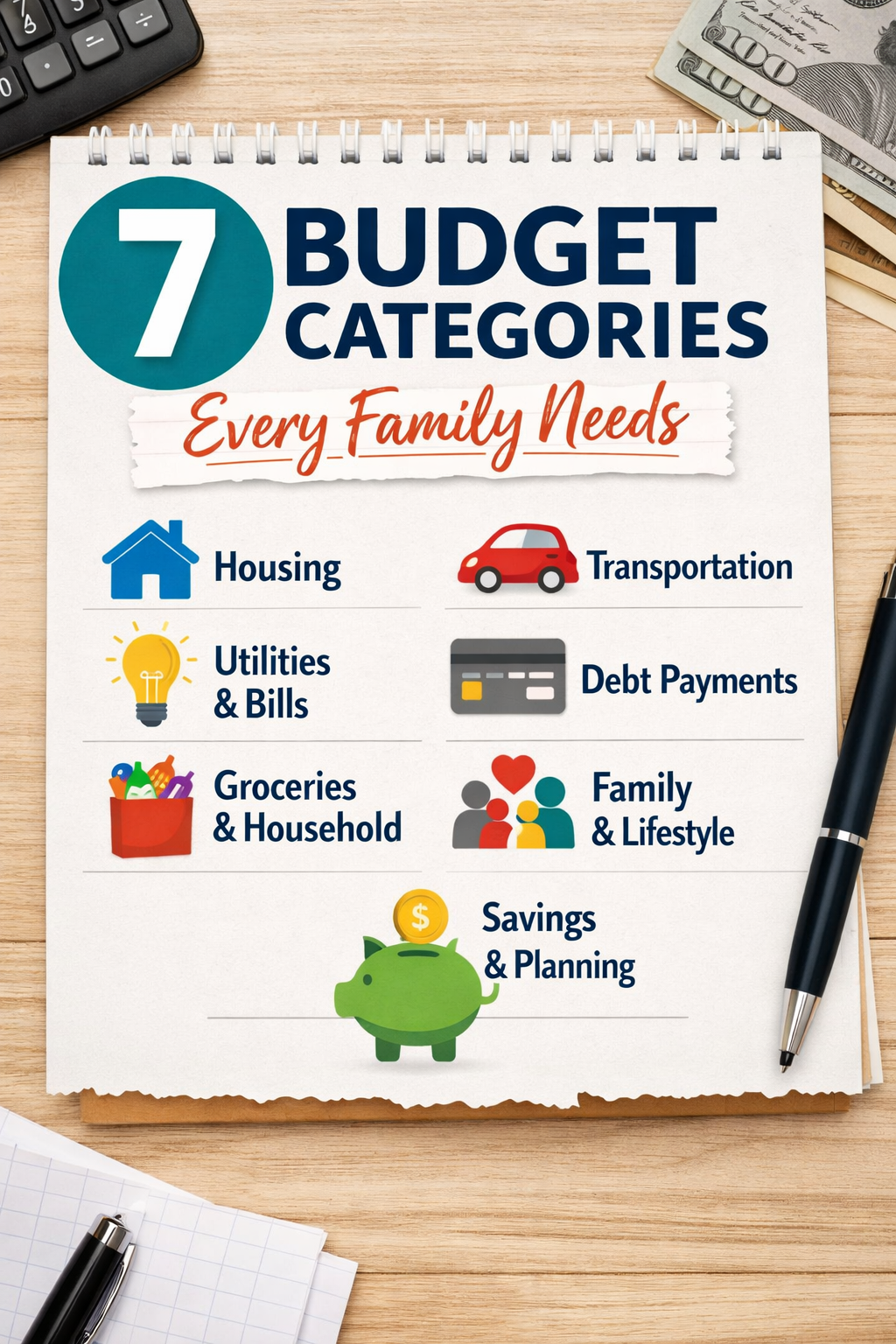
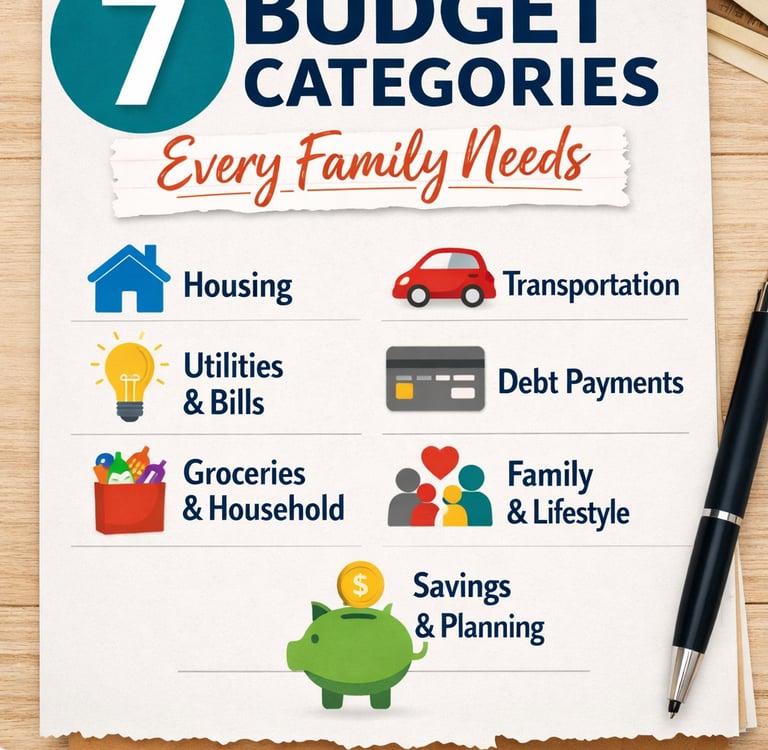
These are the 7 budget categories every family should have if they want a budget that is realistic, clear, and easy to maintain.
1. Housing
Housing is usually the biggest monthly expense, so it needs its own category.
This should include:
Rent or mortgage
Property taxes
Home insurance
Condo fees
Basic maintenance savings
A common mistake is only budgeting for the mortgage or rent and forgetting the other housing costs. That creates a false sense of affordability.
Your housing category should reflect the full cost of keeping a roof over your head, not just the main payment.
Beginner tip:
If you own your home, start setting aside at least a small monthly amount for maintenance. Home repairs are not optional. They are delayed expenses.
2. Utilities and Bills
This category covers the recurring bills that keep your household running.
This should include:
Electricity
Natural gas
Water
Internet
Cell phones
Streaming services
Security systems
Other monthly service bills
These expenses often get ignored because many are auto-paid. That is exactly why they need to be tracked.
Beginner tip:
Look at the last 3 months of actual bills and calculate an average. Do not use a random estimate. If a bill changes seasonally, budget from the higher months, not the lowest one.
3. Groceries and Household
This category covers your day-to-day home essentials.
This should include:
Groceries
Toiletries
Cleaning products
Paper products
Diapers
School snacks
Pet food if that applies to your home
This is one of the most common areas where families overspend without noticing. Not because they are careless, but because they have never set a realistic number.
Beginner tip:
Do not combine groceries with eating out. Keep them separate. If they are blended together, you will not know whether the problem is food prices, takeout, poor planning, or all three.
If grocery spending is one of the biggest trouble spots in your home, this is where using a simple budget tracker can help. My Simple Family Budget System gives you one place to map out your monthly numbers and stop guessing where the money is going.
4. Transportation
Transportation costs are often underestimated because people only think about gas.
This category should include:
Car payments
Fuel
Insurance
Parking
Public transit
Maintenance
Registration
Small repair savings
If your family has activities, commuting, school drop-offs, or multiple drivers, this number matters.
Beginner tip:
Maintenance should be part of the monthly budget. Oil changes, tires, and repairs are normal vehicle expenses. They are not emergencies.
5. Debt Payments
If you have debt, it needs its own category. Not hidden. Not blended into everything else.
This should include:
Credit card payments
Line of credit payments
Student loans
Personal loans
Buy now, pay later payments
Debt stays stressful when it is vague. Once it is listed clearly, it becomes something you can manage with a plan.
Beginner tip:
Write down each debt with:
balance
interest rate
minimum payment
That gives you a clear starting point and helps you stop avoiding the numbers.
If you want a simple way to organize these numbers without building your own spreadsheet from scratch, my Simple Family Budget System can help you track debt, monthly bills, and everyday spending in one clean setup.
6. Family and Lifestyle
This is the category that makes your budget realistic.
It should include:
Kids’ activities
School costs
Clothing
Haircuts
Gifts
Entertainment
Dining out
Personal spending
Small extras that come up in regular life
Many budgets fail here because people create a budget based on survival, not real life. Then the first birthday party, school fee, or takeout night throws everything off.
Beginner tip:
A working budget should include room for life. If you leave this category out or set it unrealistically low, the rest of the budget gets wrecked.
7. Savings and Future Planning
This category helps prevent future stress.
It should include:
Emergency savings
Christmas savings
School savings
Vacation savings
Home repair savings
Car repair savings
Other sinking funds
A lot of people think they need to “wait until there is extra money” to save. That is usually why savings never happen.
Even a small amount set aside consistently is better than hoping a future month will somehow be easier.
Beginner tip:
Start with one small savings goal if needed. The point is not to save a huge amount right away. The point is to stop treating predictable future expenses like surprises.
This is also where a simple budget system makes a difference. It is easier to save when your bills, debt, and spending are already organized. My Simple Family Budget System is built to help busy families keep all of that in one place without overcomplicating the process.
What Beginner Budgeters Need to Know
Use real numbers, not ideal numbers
Your first budget should be based on what you actually spend, not what you hope to spend.
Go through the last 2 to 3 months of:
bank statements
credit card statements
bills
subscription charges
Keep categories broad at first
You do not need dozens of tiny categories to have a good budget. Start broad. Get consistent first. You can always add more detail later.
Budgeting is not about restriction
A budget is not punishment. It is a plan. It tells your money where to go before it gets spent without intention. That is the real value.
Irregular expenses still count
If something happens every year, it belongs in the budget.
That includes:
holidays
birthdays
school startup costs
sports fees
vehicle maintenance
annual subscriptions
Check your budget weekly
Most families do not need to track every dollar every day.
A simple weekly check-in is enough to:
see what has been spent
catch problems early
make small adjustments before the month gets away from you
How to Start a Family Budget Simply
If you are brand new, keep it basic.
Step 1
Write down your monthly take-home income.
Step 2
Set up these 7 categories:
Housing
Utilities and Bills
Groceries and Household
Transportation
Debt Payments
Family and Lifestyle
Savings and Future Planning
Step 3
Review the last 2 to 3 months of spending.
Step 4
Assign a realistic amount to each category.
Step 5
Check in weekly and adjust as needed.
That is enough to get started. You do not need perfection. You need visibility.
Final Thoughts
A family budget should help you feel more clear, not more stressed.
If you are always guessing, your categories are probably too messy or your numbers are not based on reality. Fix that first.
Start with these 7 categories. Keep them simple. Use real numbers. Review them weekly.
That is how a budget starts working in real life.
Want an easier way to set this up without building your own system from scratch?
My Simple Family Budget System is designed for real families who want a clean, flexible way to track bills, spending, debt, and savings in one place.
Use it to stop guessing and start budgeting with more clarity.